
Project Overview
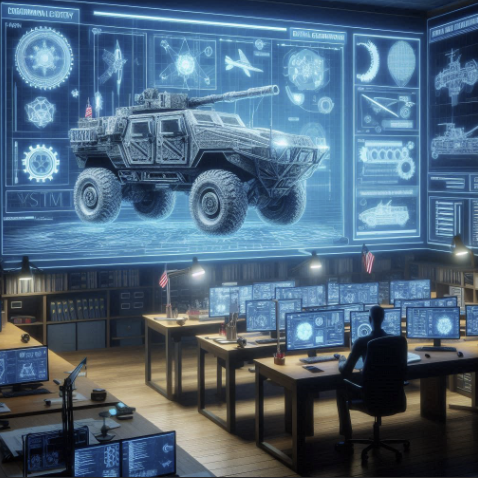
DELTA-FORCE is a digital engineering and digital twin research initiative led by George Mason University in collaboration with the National Center for Manufacturing Sciences (NCMS) and the U.S. Army Ground Vehicle Systems Center (GVSC). The project focuses on developing an integrated digital twin framework for lifecycle modeling, trade-off analysis, reverse engineering, and sustainment of ground vehicle systems.
The project establishes a comprehensive digital engineering environment that integrates requirements engineering, conceptual design, system architecture, parametric design models, component-level simulations, and operational sustainment models into a unified lifecycle framework.
Technical Objectives
The DELTA-FORCE framework is designed to:
- Develop integrated lifecycle digital twin models for ground vehicle systems
- Enable multi-disciplinary and multi-fidelity modeling and simulation
- Support model-based systems engineering (MBSE) workflows using SysML
- Create ontology-driven interoperability across engineering domains
- Integrate reverse engineering methods with digital twin environments
- Support trade-space exploration, predictive analysis, and decision support
- Enable co-simulation between system, component, and physics-based models
The project combines conceptual system models, analytical methods, parametric engineering models, and high-fidelity simulations into a common digital engineering ecosystem.
DELTA-FORCE Technical Concept
The DELTA-FORCE architecture integrates:
- Baseline ontology and machine-interpretable semantics
- MBSE and SysML system architectures
- Parametric system design models
- Domain-specific component simulations
- Reverse-engineered physical system data
- Multi-disciplinary analytical methods for trade-off analysis
The framework enables end-to-end lifecycle integration from conceptual design through sustainment and operational analysis.
Digital Twin and Lifecycle Integration
The project develops a digital twin environment capable of integrating models across varying levels of fidelity, including:
- Requirements and architecture models
- Mechanical and control system models
- CAD and physics-based simulation models
- Component-level digital representations
- Sensor-enabled physical system data
The resulting framework supports exploratory analysis, predictive maintenance, lifecycle optimization, and decision-making for complex ground vehicle systems.
Reverse Engineering and Digital Vehicle Workbench
A key component of the project is the development of a reverse engineering methodology tailored for military ground vehicles. The project establishes a Digital Vehicle Workbench that supports:
- Digital representation of vehicle components and subsystems
- Finite element model generation
- Parametric vehicle model development
- Early-stage design assessments
- Integration with lifecycle digital twin environments
This effort builds on George Mason University’s prior experience developing digital twins for transportation and vehicle systems.
Workforce Development
DELTA-FORCE also includes a workforce development initiative focused on preparing future engineers for digital engineering and digital twin technologies. Activities include:
- Development of undergraduate digital engineering coursework
- Hands-on student involvement in digital twin research
- Industry and government training tutorials
- MBSE and SysML training
- Digital engineering workshops and instructional materials
The program emphasizes interdisciplinary systems thinking and lifecycle engineering methodologies.
Deliverables and Research Outputs
Major project deliverables include:
- State-of-the-art survey on digital transformation and digital engineering
- Baseline ontology developed in Protégé
- MBSE/SysML architecture and design models
- Digital engineering instructional material and tutorials
- Undergraduate course materials
- Conference publications and technical papers
Suggested Graphics to Include
- DELTA-FORCE Technical Concept Diagram (Page 12)
- DELTA-FORCE Operational Workflow (Page 13)
- Workforce Development Graphic (Page 14)
- Major Tasks and Timeline (Page 21)
- Architecture/Integration Figure from the conference paper